


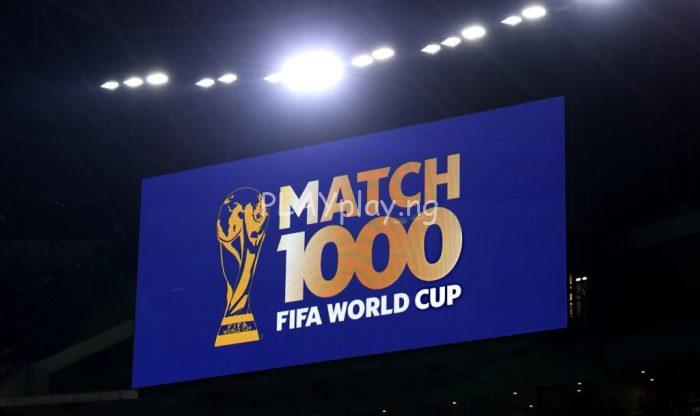
Tunisia became the first African nation to be eliminated from the 2026 FIFA World Cup after suffering a crushing 4-0 defeat to Japan in the tournament’s historic 1,000th match on Saturday in Monterrey, Mexico.
The Carthage Eagles’ miserable campaign went from bad to worse as they were completely outclassed by an impressive Japanese side, condemning them to a second successive heavy defeat and an early exit from the competition.
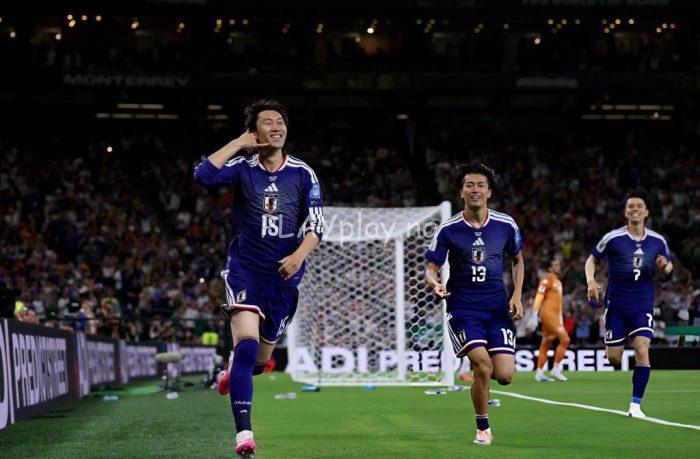
Goals from Daichi Kamada, Ayase Ueda, who scored twice, and Junya Ito sealed an emphatic victory for the Samurai Blue, who moved to the brink of qualification for the knockout stages.
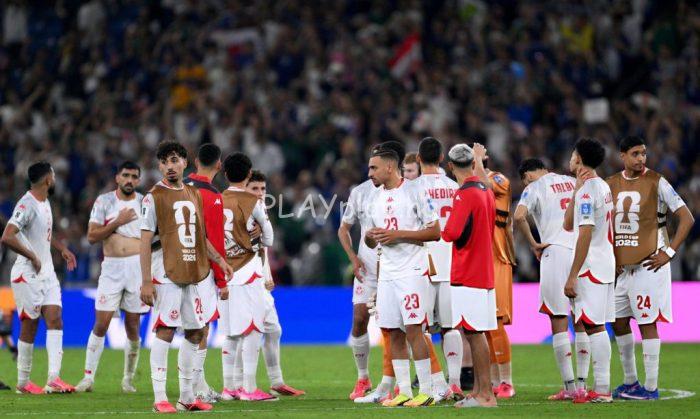
For Tunisia, however, the defeat represented a humiliating end to their World Cup dream, making them the second team eliminated from the tournament after Haiti and the first African side to bow out.
Historic Night Turns Into a Nightmare
The occasion was meant to be historic.
Tunisia and Japan had the honour of contesting the 1,000th match in FIFA World Cup history at Monterrey Stadium.
Instead, it became a night Tunisian supporters will want to forget.
Japan needed only four minutes to break the deadlock.
The dangerous Keito Nakamura burst into the penalty area before squaring the ball across goal, where Daichi Kamada was perfectly positioned to force the ball home through a crowded penalty box.
The strike was Kamada’s second goal of the tournament and the fastest goal ever scored by a Japanese player at the FIFA World Cup, surpassing Shinji Kagawa’s sixth-minute strike against Colombia in 2018.
Japan doubled their lead after 31 minutes when Ayase Ueda was afforded far too much space on the edge of the penalty area. The striker advanced unchallenged before unleashing a powerful effort past the helpless Bechir Ben Said.
Any hopes of a Tunisian comeback evaporated midway through the second half.
Ueda turned provider in the 69th minute, setting up Junya Ito to score Japan’s thir
d before the in-form forward completed his brace late in the contest to wrap up a comprehensive victory.
The result also entered the history books as Japan recorded the biggest World Cup victory ever achieved by an Asian Football Confederation nation.

Renard’s Arrival Fails to Inspire Turnaround
The match was the first game in charge for new Tunisia head coach, Herve Renard, who had only been appointed earlier in the week following the departure of Sabri Lamouchi.
There had been hope that the vastly experienced Frenchman could inspire an immediate reaction.
However, Renard’s warnings before the game that there are “no magicians in football” proved prophetic.
Despite the excitement surrounding his appointment, Tunisia delivered another lifeless display.
After losing their opening game 5-1 to Sweden, the Carthage Eagles were expected to respond with greater urgency against Japan, particularly with their World Cup survival on the line.
Instead, they failed to register a single save from Japan goalkeeper Zion Suzuki throughout the entire match.
The North Africans looked disorganised, devoid of confidence and lacking the fighting spirit that has traditionally characterised Tunisian teams on the world stage.
“We Prepared Well” – Moriyasu Delighted
Japan head coach Hajime Moriyasu praised his players for executing their game plan perfectly.
“We prepared well for what we wanted to do and played aggressively. During our preparations, the coaching staff made it clear what we needed to do, and because of that the players were able to perform to their full potential.”
Moriyasu also paid tribute to the Japanese supporters who travelled to Mexico.
“Many Japanese supporters came here to Monterrey, sang the national anthem with us and cheered us on loudly. Their support was a huge boost for us.”
Tunisia’s Campaign Descending Into Infamy
After only two matches, Tunisia find themselves rooted to the bottom of Group F with zero points, one goal scored and nine conceded.
Their goal difference of minus eight is already among the worst ever recorded by an African nation at a World Cup after two games.
The Carthage Eagles have now lost both opening matches by four-goal margins, becoming the first team since Greece in 1994 to suffer such heavy defeats in their first two games at a World Cup.
Group F standings now see the Netherlands and Japan jointly leading the section on four points, Sweden sitting third on three points, while Tunisia remain pointless and eliminated.
| Team | P | W | D | L | GF | GA | GD | Points |
|---|---|---|---|---|---|---|---|---|
| Netherlands | 2 | 1 | 1 | 0 | 7 | 3 | +4 | 4 |
| Japan | 2 | 1 | 1 | 0 | 6 | 2 | +4 | 4 |
| Sweden | 2 | 1 | 0 | 1 | 6 | 6 | 0 | 3 |
| Tunisia | 2 | 0 | 0 | 2 | 1 | 9 | -8 | 0 |
Should Tunisia suffer another heavy defeat against the Netherlands in their final group match, comparisons with some of the worst World Cup campaigns in history will become unavoidable.
The Carthage Eagles risk joining the likes of
- Zaire national football team,
- El Salvador (1982),
- Saudi Arabia (2002),
- North Korea (2010) and
- Panama (2018)
among teams remembered primarily for disastrous World Cup performances.
What makes Tunisia’s collapse particularly alarming is that they entered the tournament ranked 44th in the world, qualified from Africa without conceding a goal and had participated in six of the last eight World Cups.
Expectations had been significantly higher.

Internal Turmoil Exposed
Tunisia’s struggles on the pitch have been compounded by tensions behind the scenes.
Reports of divisions between players, federation officials and sections of the media contributed to the departure of former coach, Sabri Lamouchi after the opening defeat to Sweden.
Renard had urged everyone associated with the national team to unite and “live in the present,” but those appeals appear to have had little impact.
The atmosphere surrounding the camp has drawn comparisons with previous troubled African World Cup campaigns, including those involving Cameroon and Ghana in 2014 and Togo in 2006.
Veteran defender Ali Abdi delivered a remarkably candid assessment after the defeat.
“I apologise to the Tunisian supporters, but not to those people who amuse themselves by leaking information left and right,” Abdi told journalists.
“We don’t have time to work. Instead of fixing the glass, we tear everything down and rebuild every time.”
“We’re coming to play a World Cup with players who have never played together.”
His comments appeared to reference recent squad upheaval, including the omission of experienced internationals Yassine Meriah and Ferjani Sassi, who boast more than 200 international caps combined.
Renard Admits Tunisia Were Too Soft
Speaking after the match, Renard acknowledged that his side had fallen well below acceptable standards.
“We can’t be satisfied with a score like that,” summarised Renard.
“In the first half, we were unable to get out with the ball. For the first twenty minutes of the second half, we did it well, and then we were too soft defensively and we conceded a goal.”
Individual errors again proved costly.
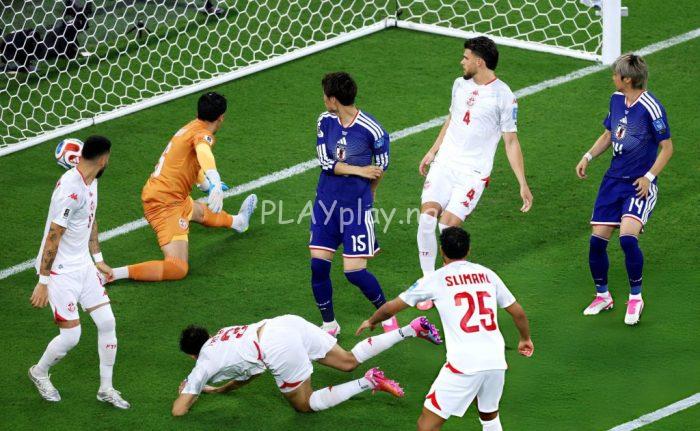
Yann Valery was beaten too easily in the build-up to the opening goal, Omar Rekik’s failed clearance contributed to Japan’s second, while defensive lapses and poor communication led directly to the third and fourth goals.
One Final Chance to Restore Pride
Although Tunisia’s World Cup journey is over, they still have one final group match against the Netherlands.
For Renard, the objective are;
– Avoid further embarrassment,
– Restore some pride, and
– Ensure Tunisia do not go down statistically as Africa’s worst-ever World Cup team.
Given the scale of the challenge facing him after only days in charge, achieving even that may require one of the Frenchman’s most remarkable coaching miracles.
The post TUNISIA Becomes First African Team to be Eliminated from 2026 World Cup appeared first on Latest Sports News In Nigeria.